2026 Top Types How to Train Workers for Glass Machine Safety?

Time:2026-10-18 Author:Sienna
0%

Glass machinery is becoming faster, smarter, and less forgiving. In 2026, manufacturers must train people, not merely install guards. The question is practical: How to train workers for safe operation of glass machines while maintaining production speed and quality?

Effective training begins beside the machine. Workers should identify pinch points, heated surfaces, sharp edges, moving belts, emergency stops, and stored energy. They need supervised practice with loading, cutting, edging, cleaning, and fault recovery. A trainer should demonstrate each task slowly, then observe the worker repeating it. One missed step matters. A loose sleeve can become a serious hazard within seconds.

Process-safety expert Trevor Kletz wrote, “People do not cause accidents; defenses do.” His statement encourages a broader approach. Training should include machine design, clear procedures, lockout and verification, personal protective equipment, and reporting of near misses. It should also explain why shortcuts fail, even when experienced operators use them. Small details matter: where hands rest, how glass is supported, and whether a warning light is actually visible.

This guide examines the top training types for glass machine safety in 2026. It covers induction training, task-based instruction, refresher sessions, emergency drills, and competency checks. Some programs still rely too heavily on signatures. That is not enough. A worker may understand a rule yet hesitate during a real jam. Therefore, realistic scenarios and repeated coaching deserve more attention. The strongest systems measure behavior, not attendance, and improve when workers admit what they still do not understand.
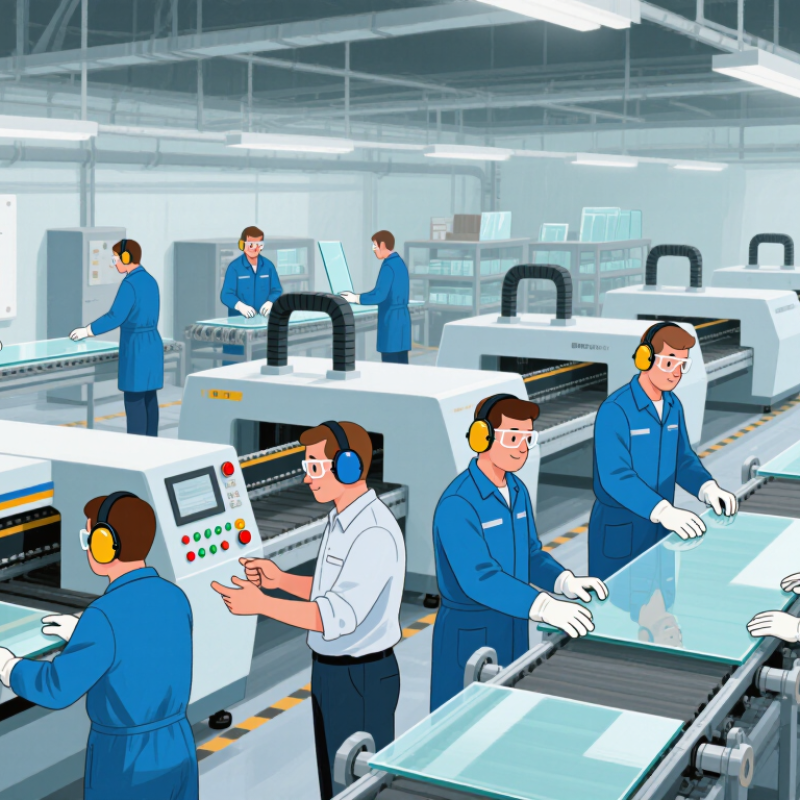
2026 Top Types How to Train Workers for Glass Machine Safety?

Glass Machine Safety Training: Key Equipment Types and Workplace Risks

Glass machine safety training in 2026 must match each equipment type. Cutting tables create sharp-edge and flying-fragment hazards. Edging and grinding machines can expose workers to entanglement, noise, and respirable dust. Tempering furnaces add severe heat and burn risks. Conveyors and lifting systems may crush hands or feet. OSHA identifies machine-related incidents as a major source of serious workplace injuries, including thousands of amputations each year. NIOSH also warns that silica-containing materials can create dangerous airborne dust during processing.

Effective training should begin beside the machine, not inside a classroom alone. Demonstrate guard checks, emergency stops, lockout procedures, safe glass positioning, and correct personal protective equipment. Workers should practice identifying a loose belt, blocked sensor, unstable sheet, or damaged glove. The International Labour Organization stresses that competent supervision and hazard assessment strengthen safety performance. Training records should include skills checks, refresher dates, and reported near misses.

Tips: Use a short pre-shift inspection. Keep hands outside danger zones. Never bypass an interlock. Require eye, hand, hearing, and respiratory protection when risk assessments demand it. One weakness remains common: workers may pass a quiz but still rush during production pressure. Supervisors should watch real tasks and correct unsafe habits immediately. Review the training after every near miss, because a perfect procedure can still fail in a dusty, noisy workplace.

2026 Glass Machine Safety Training: Key Equipment Types and Workplace Risks

This training matrix identifies the primary safety topics that should be covered for common glass-processing equipment. A value of 1 means the topic is a primary training requirement for that equipment type; 0 means it is not the main risk category.

The risk categories reflect controls addressed by OSHA requirements for machine guarding, lockout/tagout, personal protective equipment, respirable crystalline silica, hazard communication, noise exposure, and material handling.

References: OSHA 29 CFR 1910.212, 1910.147, 1910.133, 1910.1053, 1910.1200, 1910.95, and 1910.176.

Worker Orientation: Glass Machine Hazards, Controls, and Safe Operating Rules

Worker orientation for glass machinery should begin beside the equipment, not in a classroom alone. OSHA estimates that machine-related incidents cause about 18,000 amputations and 800 deaths annually in the United States. Glass machines add sharp edges, crushing points, flying fragments, heat, noise, and unexpected movement.

Show workers how a sheet travels through rollers, cutters, conveyors, and unloading areas. Use a clear glass panel to demonstrate hidden pinch points. Explain guards, interlocks, emergency stops, and safe distances. Every operator should inspect guarding before starting work. They must never bypass an interlock or reach into a moving machine.

OSHA’s Control of Hazardous Energy standard requires authorized workers to isolate energy before maintenance or jam removal.

Make lockout/tagout practical. Let trainees identify electrical, pneumatic, hydraulic, and stored mechanical energy. Then require them to verify zero energy using approved procedures.

Safety glasses with side protection, cut-resistant gloves, hearing protection, and suitable footwear should match the actual task. Gloves can create entanglement risks near rotating parts, so supervisors must explain when not to wear them.

Keep the lesson active. Ask workers to point toward the nearest emergency stop and describe their response to broken glass. The U.S. Bureau of Labor Statistics recorded 5,283 fatal occupational injuries in 2023, showing why routine controls cannot become routine assumptions. Training records should include observation, questions, and practical demonstrations.

A checklist may still miss a hazard. Supervisors should watch real work and correct unsafe shortcuts immediately.

Speaking up must be treated as a safety action, not a personal failure.

Step-by-Step Instruction for Loading, Operating, and Cleaning Glass Machines

In 2026, effective glass machine training must match the machine type. Cutting tables, edging units, and washing systems create different risks. Trainers should demonstrate each task beside the equipment, not only in a classroom. Workers inspect guards, emergency stops, cables, rollers, and suction tools before loading. They wear eye protection, cut-resistant gloves, safety footwear, and close-fitting clothing. Keep hands clear. Two-person handling is safer for large or heavy sheets. A damaged pane should never enter production.

Loading requires a clear path and stable support points. Workers check the glass for cracks, confirm its orientation, and place it gently against the guides. They should avoid twisting while carrying it. During operation, trainees watch feed speed, unusual vibration, sharp sounds, and glass movement. Stop the machine when anything feels abnormal. Never reach across moving rollers or remove a jam by hand. Emergency controls need practice, not just explanation. A trainer should observe several repetitions and correct small habits immediately.

Cleaning starts after the machine stops and its energy is isolated according to site procedures. Workers wait for moving parts to fully settle, then use approved brushes, cloths, and cleaning solutions. They should never spray directly toward electrical parts or force hands into narrow spaces. Residue around belts and rollers needs careful attention. Our early training was too fast, and some workers remembered the steps but missed the reason. That weakness deserves honest review. A simple checklist, signed observation, and refresher practice can reveal gaps before they become injuries.

Personal Protective Equipment, Lockout Procedures, and Emergency Response

2026 Top Types How to Train Workers for Glass Machine Safety?

Effective glass machine safety training must feel practical, not like a classroom formality. Workers should identify sharp edges, moving rollers, hot surfaces, and flying fragments before operating equipment. During hands-on training, supervisors can demonstrate correct personal protective equipment, including safety glasses, cut-resistant gloves, hearing protection, and protective footwear. PPE must fit properly and remain clean. Damaged equipment requires immediate replacement. I have seen workers remove gloves for convenience, then forget to put them back on. That small habit deserves direct correction.

Lockout procedures need slow, repeated practice. Workers should stop the machine, isolate every energy source, apply personal locks, and test for zero energy. A written checklist helps, but observation matters more. Supervisors should watch each step and ask workers to explain their decisions. Emergency response training should include broken glass injuries, entanglement risks, fires, and power failures. Workers need to know alarm locations, first-aid points, evacuation routes, and reporting procedures. Practice drills should use realistic details, such as a blocked walkway or poor visibility. Real conditions are rarely tidy.

Tips: Keep training groups small. Use damaged PPE examples. Let workers practice lockout steps. Check emergency contacts monthly. Record mistakes without humiliation, then discuss the cause. One missed step can reveal a weak procedure. Review training after every incident, near miss, or equipment change.

Skills Assessment, Certification, Refresher Training, and Safety Improvement

Glass machine safety training should begin with a practical skills assessment, not a classroom attendance sheet. Observe each worker starting, stopping, cleaning, and adjusting the machine. Check their response to broken glass, unexpected movement, and blocked guards. Pinch points hide behind rollers and conveyors. They must identify sharp edges, hot surfaces, stored pneumatic energy, and emergency stops before operating independently. The U.S. Bureau of Labor Statistics recorded 738 fatal work injuries involving contact with objects and equipment in 2023. BLS, Census of Fatal Occupational Injuries, 2023.

Certification should confirm demonstrated competence, not simply signed paperwork. A qualified assessor can use a task checklist covering machine isolation, lockout procedures, guarding checks, personal protective equipment, and safe restart controls. Workers should explain why each step matters. Then, they should perform it under observation. Keep the evidence.

Refresher training is needed after an incident, process change, long absence, or unsafe behavior. Short drills can improve retention: stop the line, isolate energy, report the defect, and protect the area. Supervisors should review near misses monthly and compare findings across shifts. The Health and Safety Executive reported 138 worker fatalities in Great Britain during 2023/24, showing that routine controls still deserve serious attention. HSE, Statistics on Fatal Injuries at Work, 2023/24. Some programs rely too heavily on annual courses. That is a weakness. Real improvement comes from repeated observation, worker feedback, and corrective actions that are verified on the factory floor.

2026 Top Types: How to Train Workers for Glass Machine Safety? — Skills Assessment, Certification, Refresher Training, and Safety Improvement

Practical training framework for personnel operating, maintaining, cleaning, or working near glass-processing machinery. Time ranges are planning benchmarks and should be adjusted through a documented workplace risk assessment.
Training Type Primary Workers Core Skills Typical Duration Assessment Method Qualification Evidence Refresher Trigger Safety KPI
New-Hire Safety Induction New operators, temporary workers, and contractors Machine hazards, PPE, restricted zones, emergency stops, reporting procedures 2–4 hours Written or electronic knowledge test; supervisor observation Training record and signed site-orientation checklist Job change, incident, or extended absence 100% induction completion before machine access
Machine-Specific Operator Training Cutting, edging, drilling, washing, tempering, or laminating operators Controls, start-up, shutdown, guarding, safe loading, jams, and abnormal conditions 1–3 days plus supervised practice Practical demonstration using a competency checklist Authorized-operator sign-off by a competent assessor New equipment, process change, or unsafe observation Zero unauthorized bypasses of guards or interlocks
Glass Handling and Manual-Handling Skills Material handlers, packers, warehouse staff, and machine feeders Edge awareness, safe lifting, vacuum lifters, racks, transport routes, and load stability 3–6 hours Observed lift, transfer, storage, and breakage-response exercise Task competency record and equipment-use authorization New handling device, change in glass size, or near miss Reduction in cuts, strains, dropped loads, and glass breakage
Lockout/Tagout and Maintenance Safety Maintenance technicians, electricians, and designated authorized workers Energy identification, isolation, verification, stored energy, and group lockout 4–8 hours initial training Written test plus full isolation-and-verification demonstration Authorized-worker certification and procedure-specific record At least annually and after procedure or equipment changes 100% documented isolation audits with no critical findings
Guarding, Interlocks, and Safety-Control Awareness Operators, technicians, line leaders, and supervisors Guard purpose, emergency stops, presence sensing, interlock testing, and defect reporting 2–4 hours Scenario-based test and supervised safety-device inspection Competency checklist and inspection authorization where applicable After control-system modification or failed inspection Guard and interlock inspection completion rate
PPE and Exposure-Control Training All personnel exposed to glass, noise, dust, heat, chemicals, or sharp edges PPE selection, fit, inspection, limitations, cleaning, storage, and replacement 1–2 hours PPE selection exercise and workplace observation PPE training record and fit-test record when required New hazard, PPE change, or observed misuse PPE compliance during routine observations
Emergency Response and First Aid Operators, supervisors, first responders, and shift leaders Emergency stop, evacuation, severe bleeding response, eye-injury response, and incident notification 2–4 hours; certified first aid may require longer Drill performance, scenario evaluation, and first-aid skills check Drill record and applicable first-aid certificate Scheduled drills, incident, or emergency-plan revision Emergency drill response time and completion rate
Annual Refresher and Competency Revalidation All safety-critical personnel Critical rules, lessons learned, incident trends, machine changes, and practical revalidation 2–4 hours annually Knowledge test, field observation, and corrective coaching Renewed authorization with expiry or review date Normally every 12 months or sooner if risk changes Training overdue rate and repeat unsafe-act rate
Supervisor Safety Leadership Supervisors, team leaders, and production managers Pre-task reviews, coaching, stop-work authority, incident learning, and corrective-action tracking 4–8 hours initially; quarterly workshops Observed safety conversation and action-plan review Leadership competency record and completed improvement actions After serious incident, audit trend, or role change Corrective actions closed by due date

FAQS

What hazards can glass machinery create?

Glass machines may have sharp edges, crushing points, flying fragments, heat, noise, and unexpected movement. Some hazards stay hidden. Workers should observe rollers, cutters, conveyors, and unloading areas before operating.

What should workers inspect before starting a machine?

Check guards, interlocks, emergency stops, cables, rollers, and suction tools. Confirm that the loading path is clear and stable. Never start with damaged guarding or a cracked glass pane.

How should workers load large glass sheets?

Check the glass for cracks and confirm its orientation. Use two-person handling for large or heavy sheets. Keep the sheet against stable guides. Do not twist while carrying it.

What safe behaviors are required during operation?

Keep hands away from moving rollers and cutters. Never reach across a running machine. Watch for unusual vibration, sharp sounds, or unexpected glass movement. Stop immediately when something feels abnormal.

How should workers respond to a jam?

Stop the machine and follow the site’s energy-isolation procedure. Authorized workers must isolate electrical, pneumatic, hydraulic, and stored mechanical energy. Verify zero energy before removing the jam. Hands are not jam tools.

Which protective equipment may be needed?

Use eye protection with side coverage, suitable gloves, hearing protection, and safety footwear. Wear close-fitting clothing near moving equipment. Gloves can increase entanglement risks near rotating parts. Supervisors must explain when gloves should be removed.

How should workers clean glass machinery safely?

Stop the machine and isolate its energy first. Wait until every moving part settles. Use approved brushes, cloths, and cleaning solutions. Do not spray toward electrical parts or force hands into narrow spaces.

How can training reveal weak habits?

Ask workers to point to the nearest emergency stop and explain their response to broken glass. Observe several practice repetitions beside the machine. Correct shortcuts immediately. Our earlier training moved too quickly. That needs honest review.

Conclusion

This guide explains how to train workers for safe operation of glass machines by combining practical instruction with a clear understanding of workplace risks. It introduces common glass-processing equipment, potential hazards such as sharp edges, moving parts, noise, dust, and unexpected machine movement, along with essential controls and safe operating rules. Workers learn how to inspect equipment, load materials correctly, operate controls, remove finished glass, and clean work areas without bypassing safeguards.

The training also covers suitable personal protective equipment, energy isolation and lockout procedures, emergency response, and reporting unsafe conditions. To confirm readiness, supervisors should use demonstrations, observation checklists, and skills assessments before certification. Refresher training should follow changes in equipment, procedures, or worker performance. Regular reviews of incidents, near misses, and employee feedback can help improve procedures and maintain a safer, more consistent workplace.

Sienna

Sienna

Sienna is a skilled marketing professional with a deep expertise in our company’s core products and services. With a passion for innovation and detail, she plays a pivotal role in crafting insightful blog posts that not only highlight the unique features of our offerings but also provide valuable......